NFC Card Guide | Uses, Benefits & How It Works

Let us attempt to dissect what they are, how they work and why NFC card have become so popular.


Published • Nov 24, 2025
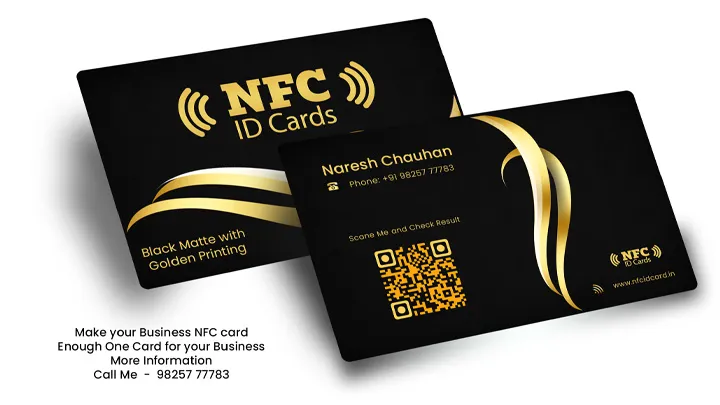
Custom NFC card showing logo and chip

What Are NFC Cards?

The NFC card is a smart card that contains a small chip and antenna of NFC. It can communicate wirelessly with another NFC-enabled device, via Near Field Communication technology, e.g., a smartphone, card reader, or payment terminal. NFC is a peer-on-peer transmission process that operates when two devices are in touch with one and other through a distance of approximately 4 centimeters.

Such cards can hold information, transfer the information and make something happen on a machine without getting in contact or swiping through the machine. A similar technology is RFID (Radio Frequency Identification) though tailored to very short distances and with both way communication.

How Does an NFC Card work?

NFC uses electromagnetic induction of two loop antenna a part of which is encapsulated in the card and the other loop is encapsulated in the reader. The card is powered when moved near the reader adjacent to the magnetic field generated by the reader. The card is then read with or without a signal send or received over a designated frequency of 13.56 MHz via the NFC chip.

NFC has two communication modes, namely:

  • Active Mode - The card and the reader create their electromagnetic fields.
  • Passive Mode - The field is created by one device, and used by another to transmit the communication (as do most of the NFC cards).

The process of sharing the data is rapid, safe and it can also be encrypted to hold off non-authorized access.

Types of NFC cards

NFC cards can be divided into two types. The first type is the Mobile NFC card, which is only one of the many applications that the mobile NFC card can run as it is compatible with MFI (Mobile-based Fast Iteration) applications.

NFC cards are of a different type according to their use:

  • NFC Payment Cards - The cards are used in making contactless transactions such as credit cards and debit cards.
  • NFC Access Cards - Access to buildings, hotels and offices.
  • NFC Transportation Cards - They are used in buses, metro, and trains to pay their tickets.
  • NFC Business Cards - These are cards that are used to exchange details, websites or determine social networks.
  • NFC Loyalty Cards (Business) - customers can be used as rewards and discount cards.

NFC Common Usages

  • Contactless Payments - This is one of the most common applications where one is able to make an immediate payment touch-to-pay by tapping the card on the payment terminal.
  • Access Control - In secure working places, residential complexes and hotels access is controlled and attendance is tracked.
  • Public Transportation - Convenient and speeds the transaction time because there is no necessity to take a paper ticket.
  • Event Management - NFC cards can be employed to serve as tickets of concerts, conferences or exhibitions.
  • Smart Marketing - Promotional links, videos or offers can be encoded into NFC business cards or tags.
  • Healthcare - Keeping the information of the patients to have easy access in cases of emergency.

NFC Cards Benefits

  • Speed – Transactions are completed in few seconds.
  • Convenience - No swiping, inserting, or entering PINs for small payments.
  • Security - Allows encryption, authentication to prevent cloning and fraud.
  • Long lasting – Limited wear and tear compared to magnetic stripe cards.
  • Flexibility - Available for payment, access, ticketing and more.

NFC Cards Security Characteristics

  • Data encryption - Prevents data theft in transit.
  • Authentication Protocols - Ensures only authorized readers access data.
  • Short Range - Reduces risk of eavesdropping/skimming.
  • One-Time Codes - Unique codes make payment systems harder to crack.

The difference between NFC and RFID Cards

NFC enables two-way communication at a shorter range compared to RFID and is used in interactive applications like payments and data exchange. RFID is mostly used for inventory tracking, logistics, and asset management over longer distances.

NFC Card Use

  1. Make sure the reader or device is NFC-compatible.
  2. Place the card near the reader (within a couple of centimeters).
  3. Wait for a beep or confirmation.
  4. Enter a PIN or use biometric authentication if required.

Future of NFC Cards

  • Smartphone Compatibility - More cards replaced by mobile wallets.
  • Biometric NFC Cards - Embedded fingerprint sensors for extra security.
  • IoT Applications - Cards interfacing with smart objects at home or business.
  • Eco-Friendly - Cards made from recycled or biodegradable materials.

Conclusion

NFC card is an intelligent, easy way to pay, access control, and information sharing. Their adoption in banking, transportation, healthcare, and marketing is rising and thus they are becoming an important aspect of our lives. NFC cards will continually grow as technology changes, and the cards will have even more innovative uses with improved security.

NFC Card FAQs

Answers to common questions about NFC cards — how they work, security, policies and more.

An NFC card (Near Field Communication) is a contactless card that operates at very short range wireless communication and can transfer data with compatibles gadgets such as smart phones or NFC readers.

An NFC card, when tapped or when brought near an NFC-capable device uses the electromagnetic field to transmit data between the devices above a physical touch connection securely and fast.

NFC is a kind of RFID technology and has a smaller range (a few centimeters), supports two-way communication but this is distinct compared to the RFID, which generally has an extended range and often one-way.

Generally NFC cards should be safe with encryptions and authentication protocols preventing unauthorized people access to your sensitive information.

Applications of NFC cards include contactless payments, building access, buses and tap-to-ride, loyalty cards, digital business cards and secure authentication.

Need Custom NFC Cards?

Get high-quality PVC, RFID, digital membership, etc. cards tailored to your business.

Request a Free Quote